
U.S. Re-engagement with the Sahel: Strategic Imperatives and Policy Shift
The United States appears to be signaling a renewed willingness to re-engage with the Alliance of Sahel States (AES)-a bloc formed by Mali, Burkina Faso, and Niger following successive military coups and shared departures from traditional Western partnerships. This shift comes after years of deteriorating cooperation and diminishing American influence in a region that remains strategically vital for counterterrorism and geopolitical balance.

In the aftermath of the 2023 coup in Niger and similar political events across the Sahel, Washington’s direct military collaboration in the region effectively collapsed. The Nigerien junta revoked its bilateral military agreement with the United States, leading to the withdrawal of U.S. forces and closure of major installations, including Air Base 101 in Niamey and Air Base 201, in Agadez. The drone facility at Agadez, had been central to American counterterrorism operations. The absence of a U.S. military presence has not only disrupted long-standing counterterrorism efforts but has also created a vacuum that has been strategically filled by rival powers. Russia for instance have been quick to exploit this vacuum to deepen their footprint through expanded military and security ties with the Sahelian authorities (RUSI).
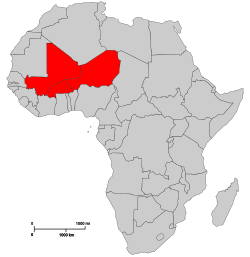
Under the current U.S. administration’s renewed Africa strategy, characterized by a focus on trade and security, the United States is beginning to recalibrate its posture in West Africa. Recent senior U.S. diplomatic engagement in Bamako by Nick Checker reflects a conscious shift toward direct dialogue and engagement with the military-led governments, prioritizing shared security interests-especially in countering violent extremist networks-over previous emphases on conditionality tied to democratic reforms. (africansecurityanalysis.com). This approach aligns with broader recommendations from organizations such as the Kratos Institute ( ECOWAS under strain…) for Washington to regain its footholds in regions where anti-Western sentiments and geopolitical competition have weakened U.S. influence.
The Sahel’s strategic importance to U.S. interests remains significant. The region continues to be a fulcrum for Islamist and extremist violence that not only destabilizes local populations but also poses broader threats to regional and international security. Recent analysis shows that the Sahel accounts for a disproportionate share of global terrorism-related fatalities, underscoring the persistence of armed group activities and the ongoing risk of southward spillover into coastal West African states (Council on Foreign Relations).
Re-engagement by Washington also reflects concern over the multipolar contest now shaping the region. As traditional Western partners retreated-France drawing down its forces alongside the U.S.-Mali, Niger, and Burkina Faso have signaled openness to alternative security partnerships, including closer alignment with Russia. This realignment has had concrete consequences for Western strategic interests, which the current action by the U.S. to re-engage could potentially avert (Business Insider Africa).
Unlike the posture Washington adopted in recent years toward other geopolitical actors, the evolving U.S. strategy in the Sahel emphasizes relationship building and normalization. By engaging directly with AES member states and their leadership, U.S. diplomats are signaling that counterterrorism cooperation, economic ties, and security partnership can be part of a renewed bilateral agenda (allAfrica.com).
This shift is significant for several reasons. First, it acknowledges that isolating military-led governments can further entrench their alignment with rival powers and diminish U.S. influence. Second, it reflects a recognition that persistent security challenges in the Sahel-rooted in complex governance, economic, and demographic drivers-require sustained engagement rather than episodic intervention. Third, it illustrates Washington’s broader recalibration in Africa policy toward a more realpolitik framework in which strategic cooperation takes precedence. Last but not least, it also demonstrates the path to redemocratization in the Sahel requires U.S. presence, engagement and dialogue.
While renewed U.S. engagement is unlikely to replicate heavy military footprints of the past in the interim, its evolution could reinforce stability over the long term if anchored in credible counterterrorism collaboration, economic development initiatives, and support for resilient democratic governance structures. By maintaining a consistent presence-diplomatic, developmental, and security-oriented-Washington can help shape incentives for accountable and responsive governance. Such an approach may not produce immediate political reform, but sustained engagement rooted in mutual interests could over time contribute to more inclusive and civilian-oriented governance outcomes across the Sahel.
For the Sahel states, a recalibrated U.S. policy offers an alternative to overreliance on a single external partner and a counterweight to growing Russian and other influences. For the United States, strategic re-engagement in the Sahel underscores a recognition that long-term security objectives, regional stability, and the fight against transnational extremist threats are best advanced through proactive and sustained diplomatic and cooperative engagement.
Washington’s shift toward constructive re-engagement in the Sahel represents not only a strategic response to rivals’ advances but also an opportunity to reinforce U.S. leadership and long-term stability in a region that remains critical to broader global security and U.S. interests.
Ernest Yeboah Asamoa
(15th February, 2026)